
World series game today
Even so, this is a remarkable horror game with many lovely, nasty facets to discover. From the tense music, the deployment of rare sound effects and animations, and the sparse but effective writing in combination with the clarity of the art, World Of Horror is doing some fabulous things. why is facebook video quality so bad It’s game that is absolutely being what it wants to be. And because of that, some of you are going to hate it.
I was introduced to the work of Junji Ito quite some time ago with “The Enigma of Amigara Fault.” That particular story haunted me for a while before I finally dove into his work proper, and I’m still waiting to see if there’s a bottom to it. He often tells stories that start with grounded simplicity before quickly dropping them into a vat of inexplicable and undefined horror. He does a great job of starting off with a world that is uncomfortably off before pushing it to incomprehensible extremes. It’s not an uncommon approach to horror, but it’s one that his personal flourish aids so well.
World of Horror is a roguelite role-playing game, built around individual self-contained playthroughs consisting of five different “mysteries” that must be solved, each corresponding to one of five keys that are used at the end of the playthrough to enter a locked lighthouse, in order to defeat one of several possible Old Gods that is threatening the town. The player must do this before the game’s “DOOM” meter reaches 100%, which marks the point at which the entity is summoned. DOOM increases each time the player takes an action, and can increase further as a result of certain events. Each of the various Old Gods apply various unique effects or limitations on gameplay.
“Absolutely an instant cult classic.”9 – Siliconera“Easily one of the most engaging RPG experiences I’ve played this year.”9 – RPG Site“There aren’t many horror games like this… Games that are so well-oiled, they’re confident their horror will spread all over you just by touching them.”Kotaku
Rock Paper Shotgun is owned by Gamer Network Limited, an IGN Entertainment company and subsidiary of Ziff Davis. © 2024 Gamer Network Limited, 18 Mansell Street Level 3, London, E1 8AA, United Kingdom. Company number 03882481. All rights reserved. No part of this website or its content may be reproduced without the copyright owner’s permission.
Rain world game
That’s because Rain World is, at its core, about the struggle to survive in a hostile world. More than just being “difficult,” Rain World paints a particular vision of what it means to survive. In Rain World, survival literally happens in cycles, both the repetitive drudgery of eating and sleeping, and in game over followed by continue. It happens in failure after failure after success, in honesty with your own limitations. Survival takes priority over progress. Survival happens in a world that is much bigger and more complex than yourself.
Here on Switch, I was rather surprised by how silky smooth the game ran. Sure, the many updates have no doubt played a big part in keeping Rain World a super polished experience, but everything looked crisp, albeit with a small font size, and the game ran smooth enough unless a ton of enemies were to come on screen, something that I didn’t have happen to me outside of goofing off in the sandbox mode. No complaints about performance here, the game just looked and felt great on my Switch Lite.

That’s because Rain World is, at its core, about the struggle to survive in a hostile world. More than just being “difficult,” Rain World paints a particular vision of what it means to survive. In Rain World, survival literally happens in cycles, both the repetitive drudgery of eating and sleeping, and in game over followed by continue. It happens in failure after failure after success, in honesty with your own limitations. Survival takes priority over progress. Survival happens in a world that is much bigger and more complex than yourself.
Here on Switch, I was rather surprised by how silky smooth the game ran. Sure, the many updates have no doubt played a big part in keeping Rain World a super polished experience, but everything looked crisp, albeit with a small font size, and the game ran smooth enough unless a ton of enemies were to come on screen, something that I didn’t have happen to me outside of goofing off in the sandbox mode. No complaints about performance here, the game just looked and felt great on my Switch Lite.
Reaching that level of proficiency takes time, but Rain World’s approach to progression makes that time for you. One of the many axes of difficulty in Rain World is its “karma” mechanic, which prevents players from moving past a region until they have survived a certain number of cycles in a row. This can be frustrating because it penalizes the already inconvenient and demoralizing process of in-game death. However, there is also a kind of liberation in this system; once you’ve hit the lowest karma possible, there’s nothing more to lose by dying. To me, it felt like the game was telling me that it was okay to fail, that I was not expected to be able to cope with all of the challenges facing me yet. In the many cycles that I found myself with minimum karma, I was free to play adventurously, to explore both the world and the controls of the slugcat. As I did so, I began to worry less about the vague idea of progress and more about just existing in Rain World as it was, indulging in the joy of discovery.
Far out in .mw-parser-output .regionicon Shoreline, the player eventually finds a vast mechanical complex in shambles, and the guide directs the Slugcat inside of it, indicating that the being within may be able to assist them. Within the complex, the player eventually finds a seemingly helpless blue robotic creature in a heavily damaged central chamber, which they may later discover is Looks to the Moon. However, she is unable to communicate with the player through anything more than incomprehensible chirping, and offers no apparent help. What happens next is up to the player, and how they interact with the several small flying creatures circling Looks to the Moon.
Oldest game in the world
The τάβλι of Emperor Zeno’s time is believed to be a direct descendant of the earlier Roman Ludus duodecim scriptorum (‘Game of twelve lines’) with the board’s middle row of points removed, and only the two outer rows remaining. Ludus duodecim scriptorum used a board with three rows of 12 points each, with the 15 pieces being moved in opposing directions by the two players across three rows according to the roll of the three cubical dice. Little specific text about the gameplay of Ludus duodecim scriptorum has survived; it may have been related to the older Ancient Greek dice game Kubeia. The earliest known mention of the game is in Ovid’s Ars Amatoria (‘The Art of Love’), written between 1 BC and 8 AD. In Roman times, this game was also known as alea.
In colonial America, the game of hazard was called crapaud by the French in New Orleans (a French word meaning “toad” in reference to the original style of play by people crouched over a floor or sidewalk). This was later shortened to craps and after several adaptations became the most popular gambling dice game in the United States. Sic bo was introduced into the United States by Chinese immigrants in the 20th century and is now a popular casino game. Another casino game, roulette, has been played since the late 18th century, and was probably adapted from English wheel games such as Roly-Poly and E.O.
Adding on, the game of ‘Snakes and Ladders’, previously known as vaikuntapaali, was originally a Hindu game. It has been speculated that this game was already being played in India as early as the 2nd century AD. Others have credited the invention of the game to Dnyaneshwar (known also as Dnyandev), a Marathi saint who lived during the 13th century AD. This game is also known by names like gyan chaupar (meaning ‘game of knowledge) or mokshapat and moksha patamu (both meaning ‘way to deliverance’).
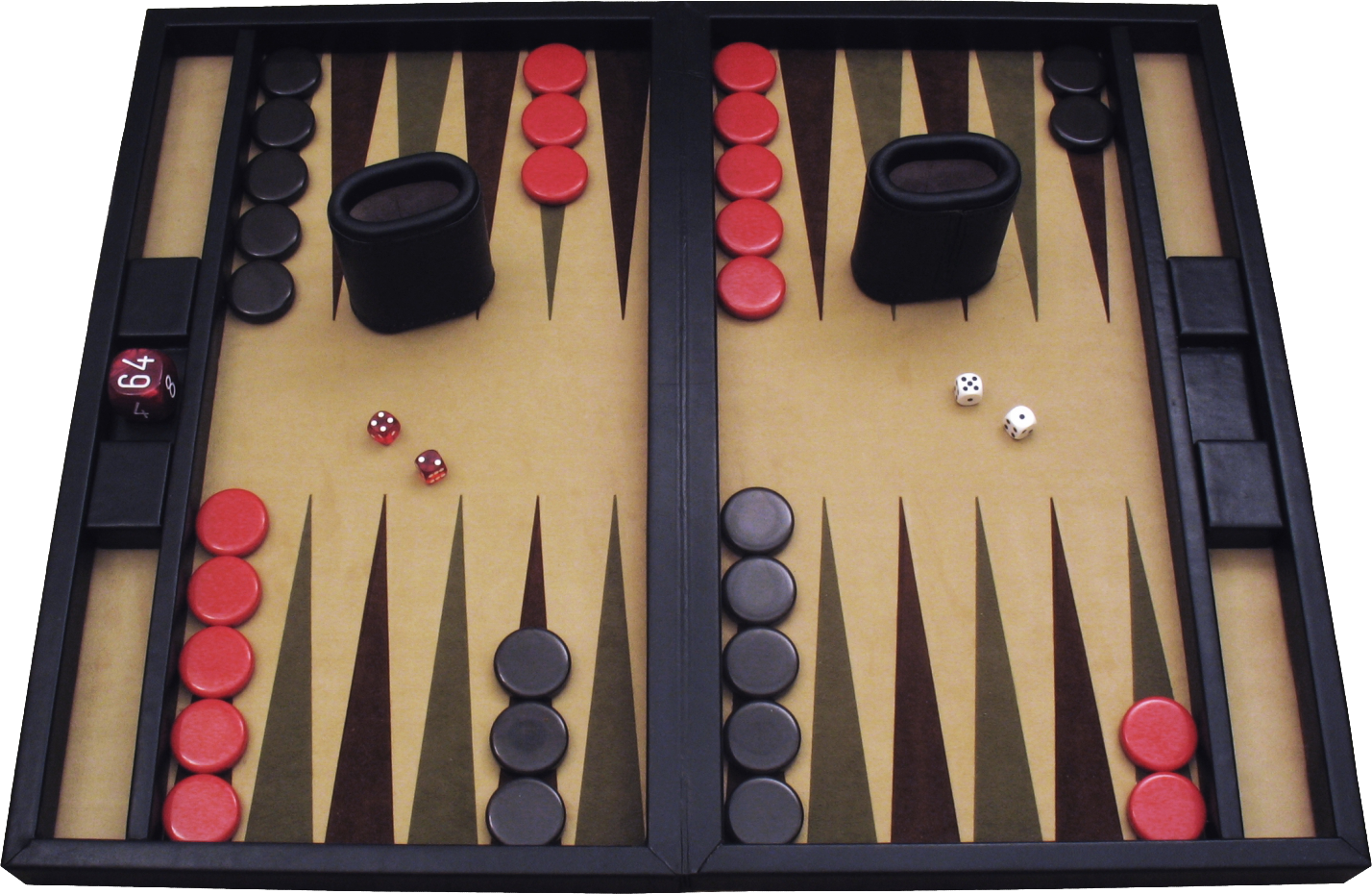
The τάβλι of Emperor Zeno’s time is believed to be a direct descendant of the earlier Roman Ludus duodecim scriptorum (‘Game of twelve lines’) with the board’s middle row of points removed, and only the two outer rows remaining. Ludus duodecim scriptorum used a board with three rows of 12 points each, with the 15 pieces being moved in opposing directions by the two players across three rows according to the roll of the three cubical dice. Little specific text about the gameplay of Ludus duodecim scriptorum has survived; it may have been related to the older Ancient Greek dice game Kubeia. The earliest known mention of the game is in Ovid’s Ars Amatoria (‘The Art of Love’), written between 1 BC and 8 AD. In Roman times, this game was also known as alea.
In colonial America, the game of hazard was called crapaud by the French in New Orleans (a French word meaning “toad” in reference to the original style of play by people crouched over a floor or sidewalk). This was later shortened to craps and after several adaptations became the most popular gambling dice game in the United States. Sic bo was introduced into the United States by Chinese immigrants in the 20th century and is now a popular casino game. Another casino game, roulette, has been played since the late 18th century, and was probably adapted from English wheel games such as Roly-Poly and E.O.
Adding on, the game of ‘Snakes and Ladders’, previously known as vaikuntapaali, was originally a Hindu game. It has been speculated that this game was already being played in India as early as the 2nd century AD. Others have credited the invention of the game to Dnyaneshwar (known also as Dnyandev), a Marathi saint who lived during the 13th century AD. This game is also known by names like gyan chaupar (meaning ‘game of knowledge) or mokshapat and moksha patamu (both meaning ‘way to deliverance’).