
Cryptocurrency exchange
Bitcoin (BTC) is the world’s first cryptocurrency built on distributed ledger (blockchain) technology, with a proof of work (PoW) mechanism that is not backed by any country’s central bank or government el royale casino login. It was founded by Satoshi Nakamoto, a pseudonym representing an individual or group of individuals, who published the white paper on October 31, 2008. It is currently the world’s biggest cryptocurrency, maintaining market dominance for the past decade.
It was possible for the average person to mine Bitcoin in the early days, but that’s no longer the case. The Bitcoin code is written to make solving its puzzles more and more challenging over time, requiring more and more computing resources. Today, Bitcoin mining requires powerful computers and access to massive amounts of cheap electricity to be successful.
In the U.S., people generally use Bitcoin as an alternative investment, helping diversify a portfolio apart from stocks and bonds. You can also use Bitcoin to make purchases, but there are some vendors that accept the original crypto.
A blockchain is a distributed ledger, a shared database of information that is chained together via cryptographic techniques. “Distributed” means that it is stored on many computers rather than a centralized server location, as is typical of most data storage.
Some examples of prominent cryptocurrencies that have undergone hard forks are the following: Bitcoin’s hard fork that resulted in Bitcoin Cash, Ethereum’s hard fork that resulted in Ethereum Classic.
Shiba inu cryptocurrency
Ordinarily, a meme coin offers owners little to no utility compared with more established cryptocurrencies such as bitcoin and ether. In the case of shiba inu coin, however, there seems to be a legitimate attempt by the development team to provide more value to SHIB holders, including launching a decentralized exchange, ShibaSwap, which we’ll explain more later in the article.
These long strings of numbers, both in terms of tokens owned and the price per token, make calculation difficult. As such, some SHIB investors multiply their holding of SHIB tokens by an optimistic future price of $0.01 per SHIB or even $1, mostly just for simplicity’s sake.
SHIB has been one of the most volatile crypto assets in 2021. It started around May 11, when SHIB’s price rose 1,953% to $0.00003532 from $0.00000172, although it plummeted quickly to $0.00000793 in the next three weeks.

Ordinarily, a meme coin offers owners little to no utility compared with more established cryptocurrencies such as bitcoin and ether. In the case of shiba inu coin, however, there seems to be a legitimate attempt by the development team to provide more value to SHIB holders, including launching a decentralized exchange, ShibaSwap, which we’ll explain more later in the article.
These long strings of numbers, both in terms of tokens owned and the price per token, make calculation difficult. As such, some SHIB investors multiply their holding of SHIB tokens by an optimistic future price of $0.01 per SHIB or even $1, mostly just for simplicity’s sake.
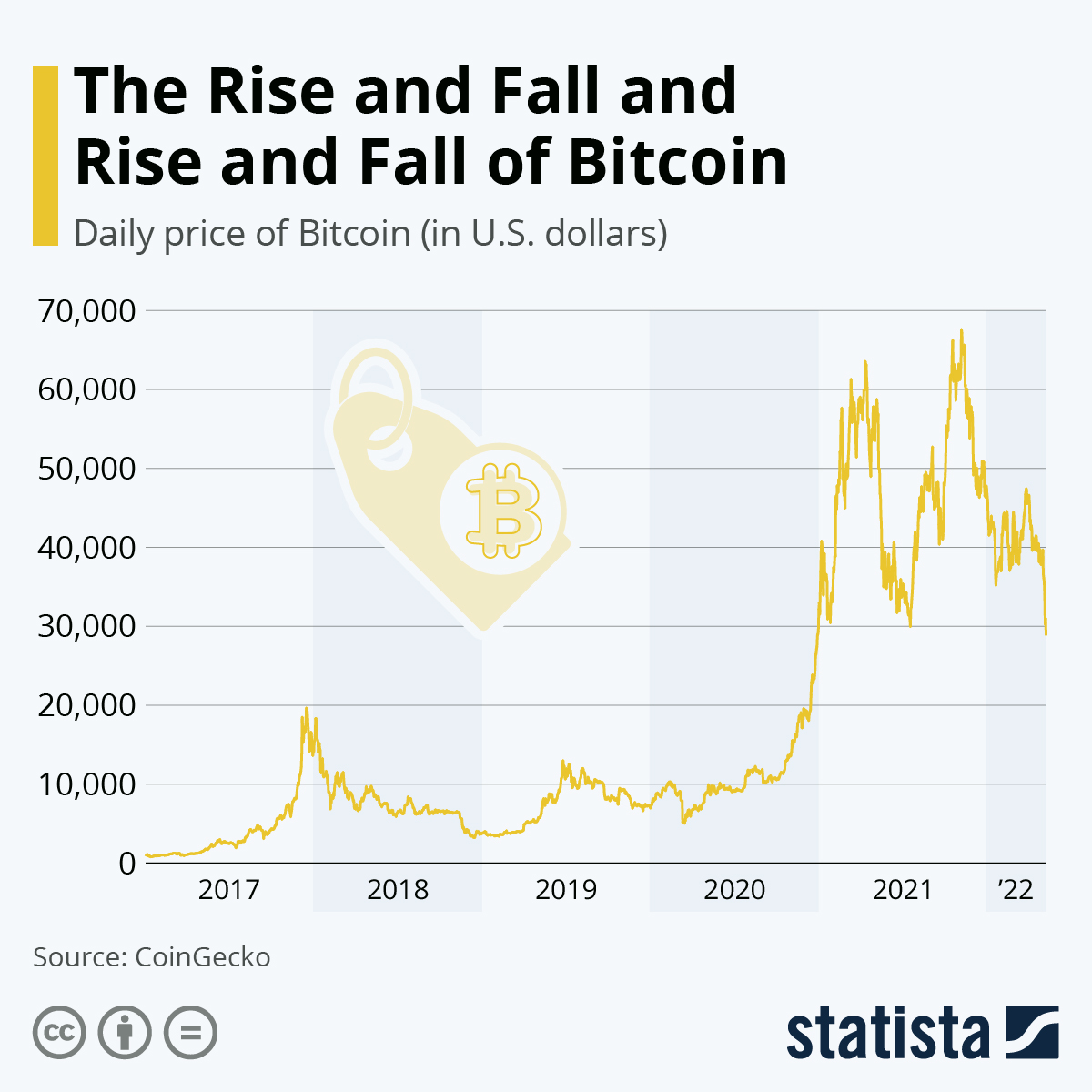
Cryptocurrency bitcoin price
However, ways of purchasing, or on-ramps, that involve the BTC being sent directly to the user’s wallet are not instant. New Bitcoin blocks are mined every ten minutes, so it takes ten minutes for any transaction to be verified and settled. This means, simply, that it takes no more than ten minutes for the individual wallet to reflect the transaction.
Each bitcoin has a complicated ID, known as a hexadecimal code, that is many times more difficult to steal than someone’s credit-card information. And since there is a finite number to be accounted for, there is less of a chance bitcoin or fractions of a bitcoin will go missing.
Every four years, the number of bitcoins released relative to the previous cycle gets cut in half, as does the reward to miners for discovering new blocks. (The reward right now is 12.5 bitcoins.) As a result, the number of bitcoins in circulation will approach 21 million, but never hit it.
However, ways of purchasing, or on-ramps, that involve the BTC being sent directly to the user’s wallet are not instant. New Bitcoin blocks are mined every ten minutes, so it takes ten minutes for any transaction to be verified and settled. This means, simply, that it takes no more than ten minutes for the individual wallet to reflect the transaction.
Each bitcoin has a complicated ID, known as a hexadecimal code, that is many times more difficult to steal than someone’s credit-card information. And since there is a finite number to be accounted for, there is less of a chance bitcoin or fractions of a bitcoin will go missing.
Every four years, the number of bitcoins released relative to the previous cycle gets cut in half, as does the reward to miners for discovering new blocks. (The reward right now is 12.5 bitcoins.) As a result, the number of bitcoins in circulation will approach 21 million, but never hit it.