
Bitcoin cryptocurrency
“The disadvantages, however, are important. Recently, several cryptocurrency exchanges have gone under, and investors have lost significant amounts of money. Given that this industry and asset class is still relatively new, there are unique risks that are nor present in traditional investments like stock and bonds https://las-atlantis-casino.com/. Investing through a cryptocurrency leaves you at the will of the exchange itself, which has a non-zero possibility of going defunct.”
For example, if you’re a hands-off trader, you should pick a platform equipped with automated trading features and tools. Most crypto exchanges are designed with active traders in mind. If you’re looking for passive crypto trading, your options are limited.
In addition to its vast selection of cryptocurrencies, Crypto.com also boasts competitive fees, varying from 0.036% to 0.40% depending on the user’s 30-day trading volume. Furthermore, Crypto.com has implemented multiple security measures, ensuring a safe trading environment for its users.
Bitcoin cryptocurrency
The news has produced commentary from tech entrepreneurs to environmental activists to political leaders alike. In May 2021, Tesla CEO Elon Musk even stated that Tesla would no longer accept the cryptocurrency as payment, due to his concern regarding its environmental footprint. Though many of these individuals have condemned this issue and move on, some have prompted solutions: how do we make Bitcoin more energy efficient? Others have simply taken the defensive position, stating that the Bitcoin energy problem may be exaggerated.
Every Bitcoin transaction that’s ever been made exists on a public ledger accessible to everyone, making transactions hard to reverse and difficult to fake. That’s by design: Core to their decentralized nature, Bitcoins aren’t backed by the government or any issuing institution, and there’s nothing to guarantee their value besides the proof baked in the heart of the system.
However, while Nakamoto was the original inventor of Bitcoin, as well as the author of its very first implementation, he handed the network alert key and control of the code repository to Gavin Andresen, who later became lead developer at the Bitcoin Foundation. Over the years a large number of people have contributed to improving the cryptocurrency’s software by patching vulnerabilities and adding new features.
The top crypto is considered a store of value, like gold, for many — rather than a currency. This idea of the first cryptocurrency as a store of value, instead of a payment method, means that many people buy the crypto and hold onto it long-term (or HODL) rather than spending it on items like you would typically spend a dollar — treating it as digital gold.
The legal status of bitcoin varies substantially from one jurisdiction to another. Because of its decentralized nature and its global presence, regulating bitcoin is difficult. However, the use of bitcoin can be criminalized, and shutting down exchanges and the peer-to-peer economy in a given country would constitute a de facto ban. The use of bitcoin by criminals has attracted the attention of financial regulators, legislative bodies, and law enforcement. Nobel-prize winning economist Joseph Stiglitz says that bitcoin’s anonymity encourages money laundering and other crimes. This is the main justification behind bitcoin bans. As of November 2021 , nine countries applied an absolute ban (Algeria, Bangladesh, China, Egypt, Iraq, Morocco, Nepal, Qatar, and Tunisia) while another 42 countries had an implicit ban. Bitcoin is only legal tender in El Salvador.
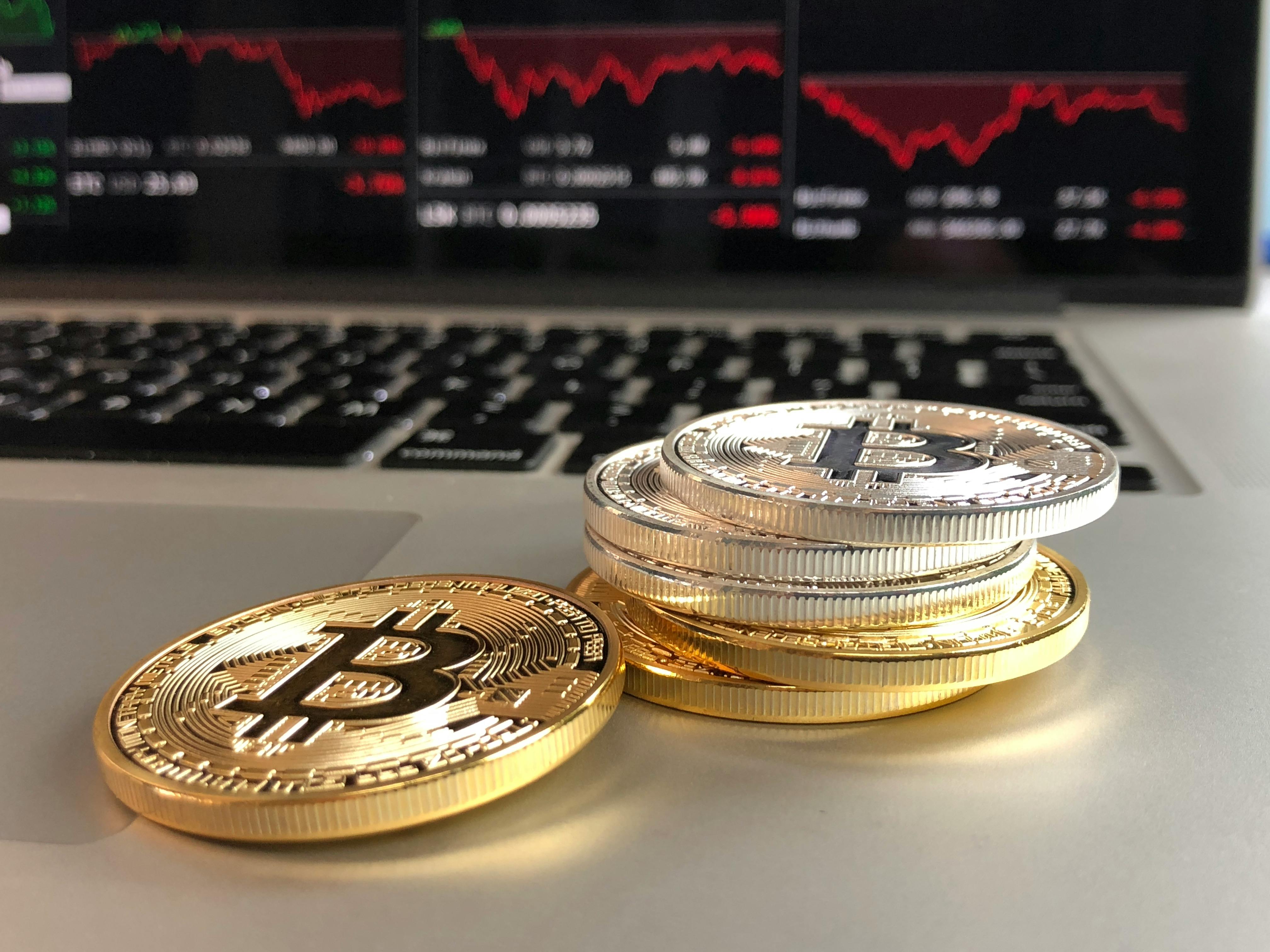
Cryptocurrency bitcoin price
Price volatility has long been one of the features of the cryptocurrency market. When asset prices move quickly in either direction and the market itself is relatively thin, it can sometimes be difficult to conduct transactions as might be needed. To overcome this problem, a new type of cryptocurrency tied in value to existing currencies — ranging from the U.S. dollar, other fiats or even other cryptocurrencies — arose. These new cryptocurrency are known as stablecoins, and they can be used for a multitude of purposes due to their stability.
A brief historyBitcoin was created in 2009 by Satoshi Nakamoto, a pseudonymous developer. Bitcoin is designed to be completely decentralized and not controlled by any single authority. With a total supply of 21 million, its scarcity and decentralized nature make it almost impossible to inflate or manipulate. For this reason, many consider bitcoin to be the ultimate store of value or ‘Digital Gold’. Bitcoin is fully open-source and operates on a proof-of-work blockchain, a shared public ledger and history of transactions organized into “blocks” that are “chained” together to prevent tampering. This technology creates a permanent record of each transaction. Users on the Bitcoin network verify transactions through a process known as mining, which is designed to confirm new transactions are consistent with older transactions that have been confirmed in the past, ensuring users can not spend a Bitcoin they don’t have or attempt to double-spend coins.
Additionally, we are likely to see the introduction of weighted crypto index ETFs designed to offer diversified exposure across the broader crypto market. These indices could include a mix of top-performing assets like Bitcoin, Ethereum, Solana, and others, along with emerging protocols, providing investors with a balanced portfolio that captures the growth potential of the entire ecosystem. Such innovations will make crypto investing more accessible, efficient, and appealing to a wide range of investors, further driving capital into the space.
Bitcoin is unique in that there are a finite number of them: 21 million. Satoshi Nakamoto, bitcoin’s enigmatic founder, arrived at that number by assuming people would discover, or “mine,” a set number of blocks of transactions daily.
CoinMarketCap does not offer financial or investment advice about which cryptocurrency, token or asset does or does not make a good investment, nor do we offer advice about the timing of purchases or sales. We are strictly a data company. Please remember that the prices, yields and values of financial assets change. This means that any capital you may invest is at risk. We recommend seeking the advice of a professional investment advisor for guidance related to your personal circumstances.
In 2024, Stacks had a transformative year with the launch of the Nakamoto Upgrade and sBTC. The Nakamoto Upgrade allowed Stacks to inherit 100% Bitcoin finality and introduced faster block speeds, significantly improving user experience. Meanwhile, sBTC, a trustless Bitcoin-pegged asset launched in December, enabled seamless participation in DeFi activities such as lending, borrowing, swapping, and staking—all anchored to Bitcoin’s security.