
What is the most popular video game in the world
I have lots of fun here and I like me you can talk to other people but I wish I had money to pay from r gems but I don’t I do have 10 on me but t that don’t help love the games glad to be here thank you
Important: Your credit card will NOT be charged when you start your free trial or if you cancel during the trial period. Night shift What is the sex market If you’re happy with Amazon Prime, do nothing. At the end of the free trial, your membership will automatically upgrade to a monthly membership.
By signing up and providing your email below you consent to receive promotional emails from Hard Rock containing offers, promotions, discounts, news on Hard Rock products and services. You can withdraw your consent at any time by clicking on the “Unsubscribe” link of each email or sending us an email at . Your personal information will be processed in accordance with our Privacy Policy which is available at this link
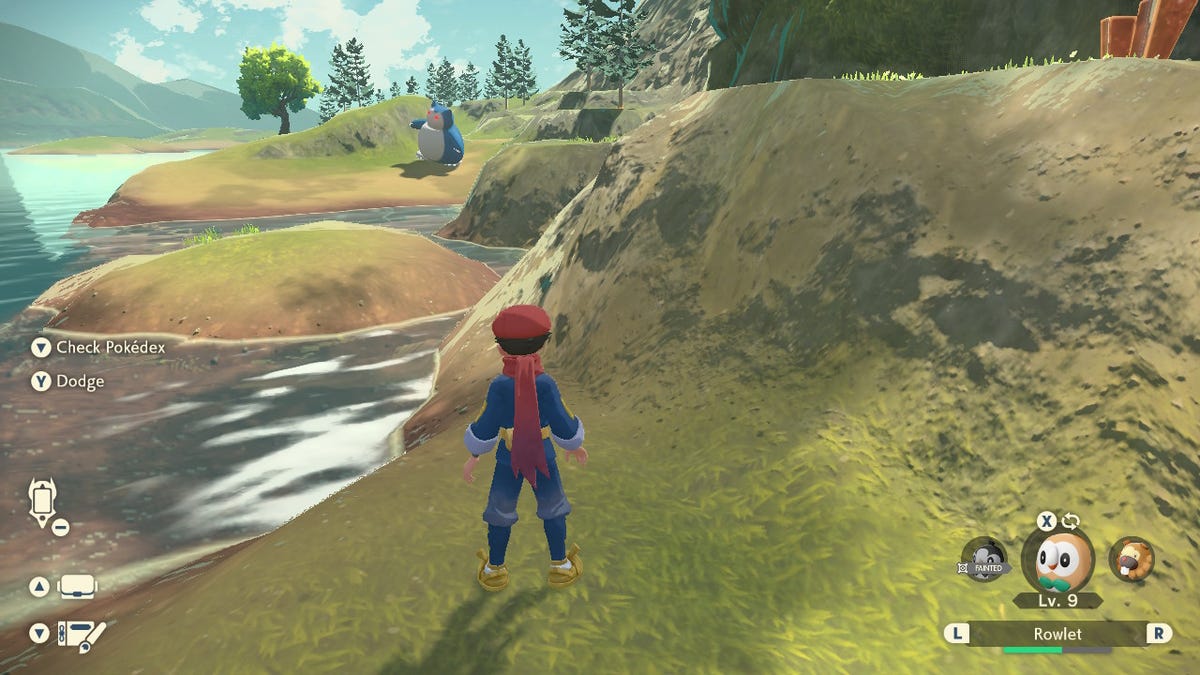
Open world pokemon game
Even if you can ignore those minor issues, the game’s general performance will gradually wear you down. Scarlet and Violet’s pop-in, in particular, is some of the worst you will ever see. Characters aren’t rendered unless you are maybe 50 feet away, which makes it difficult to see rare or shiny Pokémon in the distance. Also, it’s not uncommon for the game to deload assets while they are off-camera and then spend several seconds reloading them when the perspective shifts.
Funnily enough, while the Pokémon Company continued to make game after game following the same formula, hackers and fan game developers explored Pokémon design. Rom hacks like Pokémon Brown allowed hardcore fans to experience plentiful options. Larger lists of Pokémon from other games, unique areas, more difficult battles, entirely new creatures (often referred to as Fakemon), and enhanced world-building such as weather cycles. All of this was usually done within the confines of a Game Boy or Game Boy Advance game, reaching new heights of fan service. The practice continues to grow to this day and some of the best Pokémon experiences available were found in fan games like Pokémon Prism, a game that feels impossible on a Game Boy. Fans even made a full MMO-style game, built upon the DS-era titles, that allowed many players to enjoy Pokémon together simultaneously.
As is standard for the series, the game comes in two flavors: Scarlet and Violet. Choosing between the two is an apples and oranges situation. Do you want to catch Larvitar or Bagon? Would you rather start with orange or purple shorts? Trading is still available, so dedicated players should be able to catch ‘em all eventually, but multiplayer doesn’t end there. Scarlet and Violet let players team up to take down raid bosses, and in a series first, gamers can even join each other in their own copies of Pokémon. Technology is incredible!
What I find most interesting is the scaling. Shockslayer, the creator of the romhack, put in the hours because each trainer has about 16 sets of PKMN. The game had to account for every gym badge you got, and scale based on that. I think wild PKMN just scale to you, but each trainer and gym leader scales to your badge.
Until the release of Let’s Go Pikachu/Eevee and later Sword/Shield on Switch, traditional Pokémon games were locked to handhelds and all of them felt limited, never hitting that beautiful moment of seeing a world unfold. This is why so many fondly look at Silver/Gold/Crystal and why lots of fans consider the remakes, Soul Silver/Heart Gold, so incredible. Unfortunately, the trajectory of the franchise flatlined and the potential was left painfully untapped.
When is little league world series championship
Through 1975, all teams competed in one bracket. That year, the tournament was held with only the teams from the U.S. regions. The international teams returned in 1976, when two brackets were established, one with U.S. teams, and the other with international teams. The U.S. bracket winner and the international bracket winner would then meet in the championship game, an arrangement that has continued to the present, independent of subsequent changes made to early rounds of the tournament.
In the United States, the fate of district winners varies widely from state to state. In some larger states such as Pennsylvania, New York, and California, the district winners advance to one of many sectional tournaments. The winners of each sectional tournament then advance to a state or divisional tournament, the latter only being held in Texas and California and are similar to the state tournaments held in less populous states. Most smaller states lack competition at the sectional level and go straight from district to state tournaments. A handful of states are composed of only one district, and the district champion is the automatic state champion.
The Little League World Series is an annual baseball tournament for children (primarily boys) aged 10 to 12 years old, held in the Eastern United States. Originally called the National Little League Tournament, it was later renamed for the World Series in Major League Baseball. The Series was first held in 1947 and is held every August in South Williamsport, Pennsylvania; while the postal address of the organization is in Williamsport, the Series itself is played at Howard J. Lamade Stadium and Volunteer Stadium at the Little League headquarters complex in South Williamsport.
The first broadcast of the Little League World Series on television was on ABC Sports (now ESPN on ABC) in 1963. For years, only the championship game was televised. Since the late 1980s, when the tournament was reorganized, both the U.S. and international championships, the “semifinals”, have been shown. As the years passed, more telecasts were added on ABC, ESPN, and ESPN2. In 2006, 28 of the 36 games were televised on the three networks. In addition, several regional tournament games, which are qualifiers for the LLWS, are televised on ESPN during the days leading up to the LLWS.